 Lothian Health Services Archive
- Home
- About LHSA
- Services and Access
- Social Media
- Search Our Collections
- Source Lists
- Family Historians
- Academic Research/Teaching
- Archivists
- NHS Staff
- Schools
- Conservation
- Volunteering
- Projects
- Online Exhibitions/Resources
- Links


Projects
Cataloguing Norman Dott’s neurosurgical case notes (1920-1960)
Background
LHSA has a large and important collection of twentieth-century folder-based case notes, with around thirty specialties and over fifty physicians and surgeons represented. They are a scarce local and UK resource with potential international significance.
Between 2002 and 2009 LHSA was awarded five project grants through the Wellcome Trust's Research Resources in Medical History programme to conserve and re-house c.30% of LHSA's collection of folder-based case notes. Please see Conservation Projects for more information.
The treated case notes are now physically stable and able to be used for research, in accordance with relevant legislation, both safely and efficiently. However, few of LHSA's c.1 million case notes are catalogued to item level making access to this important material problematic. The Wellcome Trust-funded project, 'Cataloguing Norman Dott’s neurosurgical case notes (1920-1960)' will make significant advances in this area. It builds on the work of two previous projects to ensure long-term preservation of the material, and will open up the research potential of Dott's case notes.
Project aims and objectives
This project will develop a methodology for item-level cataloguing of individual folder-based patient case notes in EAD/XML to relevant standards, and catalogue c.28,000 case notes from four Dott collections. The development of a robust methodology for case note cataloguing will form a precedent for future cataloguing of LHSA’s case note collections, with additional potential for dissemination within the (medical) archive sector. The creation of an electronic catalogue will make research into historical neurosurgical records possible in more detail than ever before, with functionality to search by medical condition, procedure, treatment, date, age, sex etc.
A steering group will represent the interests of key stakeholders in the project including the medical humanities sector. Project outcomes will be disseminated in public talks, sector-specific publications, a collaborative small exhibition inside the Centre for Research Collections and LHSA online platforms.
For more information about the project please see the edited application form (in PDF format, Adobe Reader can be downloaded here) or contact us.
Project updates
January 2017
Aline finishes cataloguing the final Norman Dott case note! Preparations for the online launch of the project, including redaction of patient identifiable details, begins in earnest with colleagues from the CRC Archives Team and Library & University Collections Learning and Development Team.
January 2016
We welcome Aline Brodin to the LHSA team, former intern on the Dott project, who will cover Clair's maternity leave and work on the cataloguing of our TB case notes, also funded by the Wellcome Trust.
September 2015
Clair takes maternity leave - congratulations to Clair and family on the first LHSA baby since 2009! We start recruitment for maternity cover, with interviews in early December.
April 2015
Clair starts cataloguing, drawing on the experience she gained of the case note methodology during her internship with us towards the end of 2014.
February 2015
We wish Liz all the best for her new job in the historic search room at the National Records of Scotland. There will be a short hiatus until Clair Millar, our Project Cataloguing Archivist for our HIV/AIDS collections, finishes her work on that Wellcome funded project and then moves on to this project.
June 2014
Project Cataloguing Archivist, Liz Course, started in post on 19 May and will be covering Louise's period of secondment for the next 12 months cataloguing and promoting the project. She is currently working on cataloguing the largest of the four series of case notes, LHB1 CC/24, Royal Infirmary of Edinburgh, Professor Norman Dott Case Notes, 1941-1959.
April 2014
Louise Williams, the Dott Project Archivist, began a 12-month secondment to the LHSA Archivist post on 1 March 2014. Work has continued on the project through the contributions of our volunteers and our 10-week internship, which began in February, but we look forward to appointing a 12-month post to cover Louise's secondment soon. The closing date is 3 April, and we will be interviewing in the week commencing 14 April.
October 2013
The first year of the Dott project has been an extremely busy one, not only with the main work of cataloguing patient case records, but also with outreach activities in conferences, seminars, online and published articles and exhibitions.
The cataloguing template established with the help of the project’s steering group is adapting well to the sheer variety of documents and situations that Dott’s case notes present. However, after the initial ten-week scoping period of the project, it became clear that it would be extremely difficult to produce a meaningful catalogue entry that would provide a ‘way in’ to the case notes for different groups of researchers inside the original two years allotted to the project. Since it was not possible for us to bid for an initial scoping project to establish cataloguing methodologies prior to the official start date, accurate time-tabling predictions were extremely difficult.
In response, LHSA submitted a report to project funders, the Wellcome Trust, detailing various proposals for the future, and we are glad to say that our preferred solution (providing additional funding with a provision for volunteer help) was accepted. As a result, the project will continue until June 2015. Not only has the additional time allowed us to produce a valuable catalogue entry for every record within our Dott case note collections, but also the aid of volunteers has changed the landscape of the project considerably.
Since March 2013, four volunteers have contributed valuable additional catalogue entries to the project. Not only do volunteers quicken progress, their help also means that the project cataloguing method (without precedence in UK medical archives) is passed on to new groups of people interested in careers in archives. Cataloguing using Encoded Archival Description (EAD) is also a valuable, practical skill in a competitive job market that is focusing more and more on abilities to deliver digital research resources. Most importantly, having volunteer involvement in the Dott project has made a solo cataloguing effort into a team one.
March 2013
On Thursday 7 March, Louise attended the UK Archives Discovery (UKAD) Forum held at the National Archives, Kew. Together with Clare Button, Archivist for the 'Towards Dolly' project (cataloguing materials related to the development of animal genetics in Edinburgh), Louise presented a poster on the way in which the CRC has been working to open up history of science records to new researchers thanks to funding from the Wellcome Trust. During the poster session, Louise and Clare answered questions related to their projects and made valuable connections with archivists around the country working with similar records and sharing similar objectives.
The UKAD Forum is a chance to hear current thinking on the different ways in which archives can reach new and current audiences through information technology and to discuss the challenges of maintaining born-digital and digitised records. The popularity of the day proved that making archive catalogues available and accessible, promoting collections online and securing the future of digital holdings are essential aspects of the archivist’s role in the twenty-first century.
The poster produced for the forum is available here, and also in a summary flyer here.
Useful Links:
Towards Dolly: http://towardsdolly.wordpress.com/
UKAD Forum 2013: http://www.ukad.org/forum2013/
December 2012
Starting in September 2012, the first stage of the project has concentrated on research into Dott’s patient case note records and the development of ideas for the structure of an online catalogue. Since case notes left by Dott describe over 26,650 individual patients inside four record series, it was essential to review a significant sample of the records. There are few (if any) precedents for item level catalogues for modern case note records – a period of this initial stage was spent in deciding upon the design and content of the Dott catalogue and putting measures in place to protect the personal data of individual patients in that catalogue (more information about legislation covering medical records can be found here).
Scoping
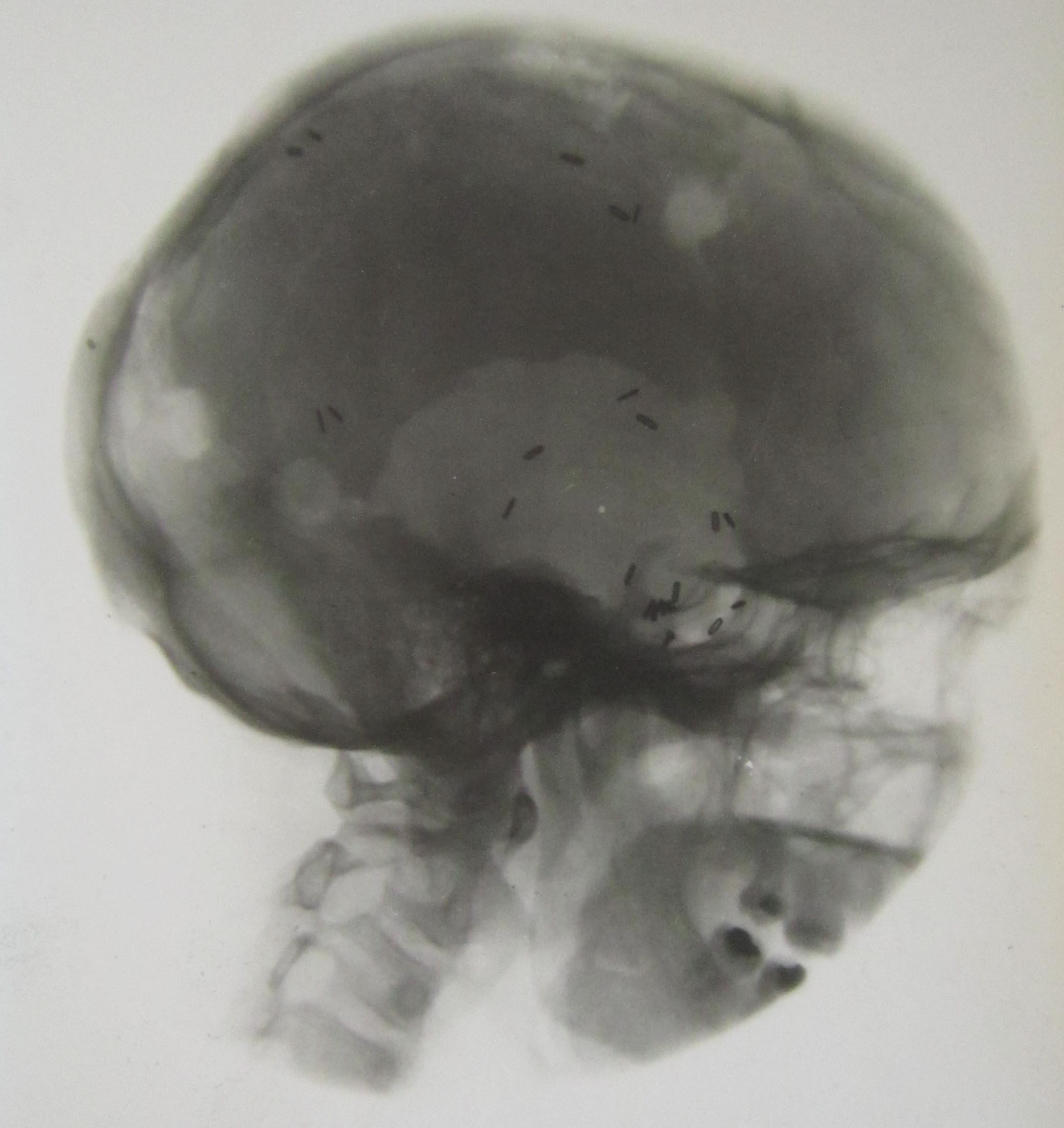
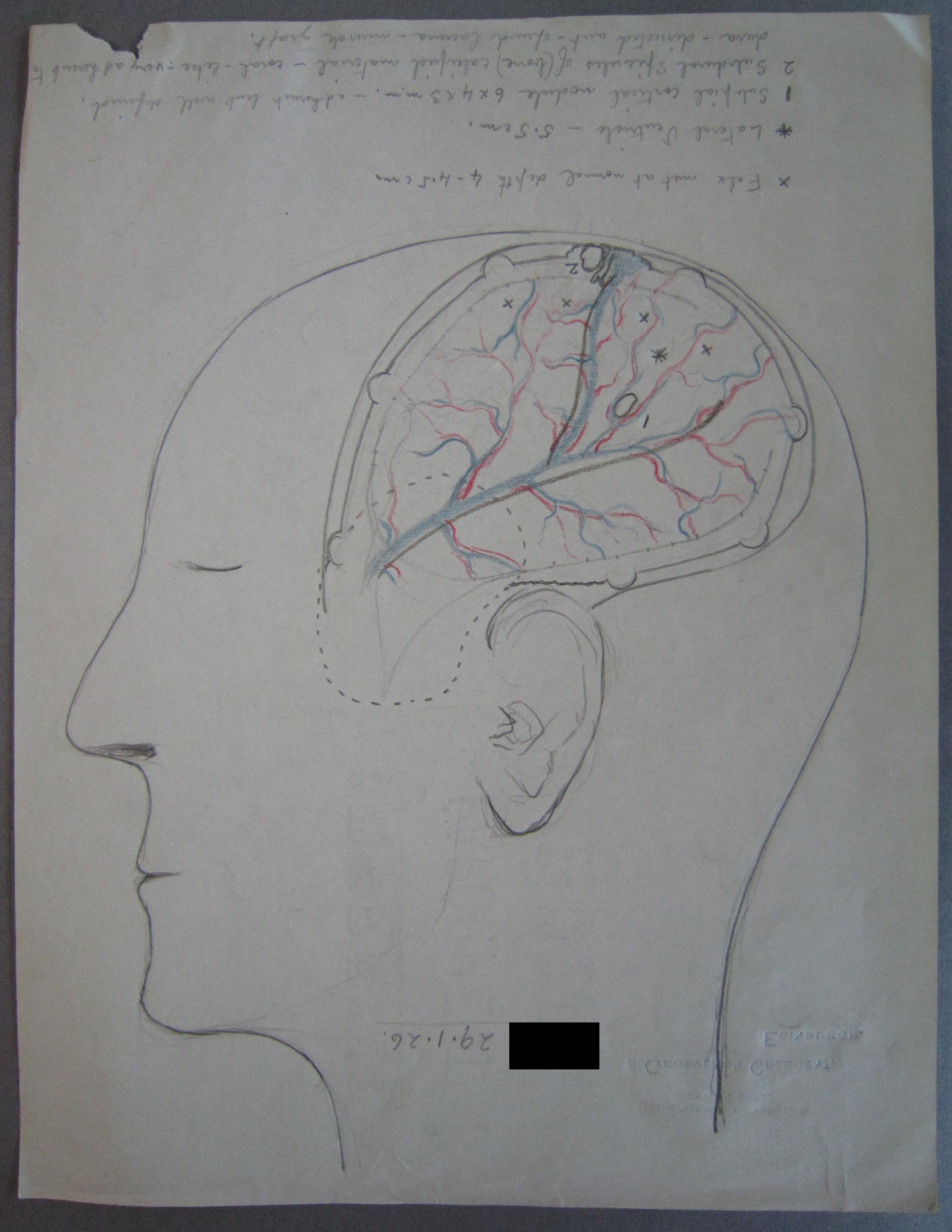
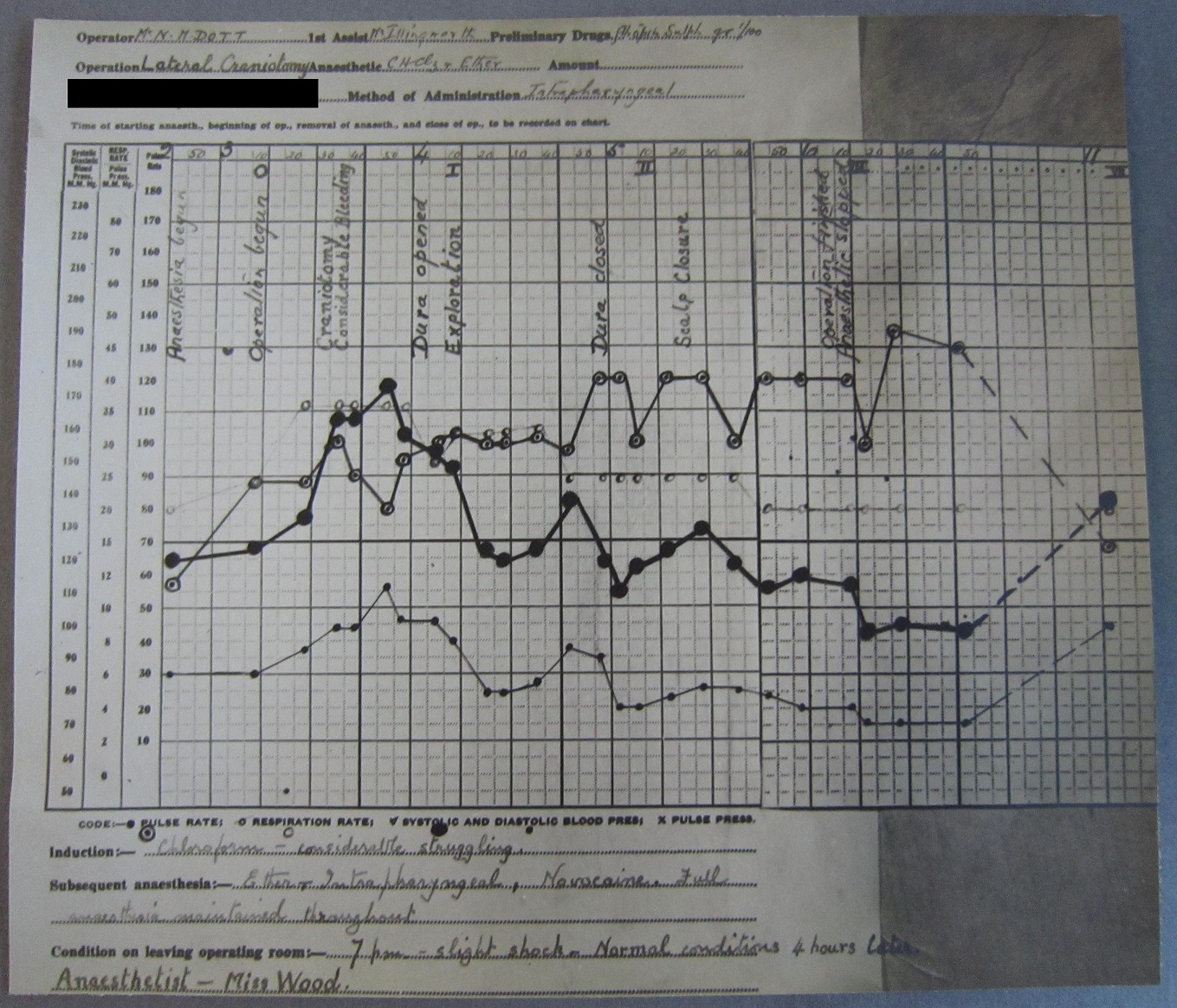
The case notes held by LHSA document the majority of Dott’s professional career, from private practice and surgery in nursing homes to his time in Ward 20 of the Royal Infirmary of Edinburgh (which became the first Department of Surgical Neurology in Scotland, opening in 1938) and his Second World War service in Bangour General Emergency Medical Service Hospital. Not only do these series cover the significant advances made by Dott in operative and rehabilitative treatment of neurological conditions, but they contain a great variety of written and image records, including typed case summaries, letters, charts, reports, photographs, x-rays and glass plate negatives. In looking at these different records, it was clear that there is no ‘typical’ patient case note, that information about patients is conveyed in many different ways and in varying levels of detail, and that decisions and diagnoses are not always clear-cut.
Catalogue design
An online catalogue will be produced as a result of the project, allowing researchers to search the case notes based on key criteria such as patient age at first treatment, sex and medical condition. To enable this level of functionality, the catalogue will be designed using Encoded Archival Description (EAD). EAD is a standard that reflects archive hierarchies and is written in eXtensible Mark-up Language (XML) - a language that structures and labels text for online display. Using EAD allows the linking of catalogues both within and across archive collections, benefitting researchers and the archive community at large. In this first stage of the project, the Project Archivist has identified key information that will be labelled using EAD to allow users to perform advanced catalogue searches, and has researched the manner in which these extremely specialist records can be described and indexed effectively and accurately – no easy task across such varied collections!
The next stage
A Project Steering Group comprising archive professionals, an academic specialist in medical history and a retired Consultant Neurologist met on 5 November 2012. After time looking at some case notes, the group discussed how a catalogue can be of most use to historical and clinical researchers, approved the essential information that will be described within it, and agreed upon priorities for cataloguing. The main cataloguing stage of the project has now begun, taking a step further in making these valuable resources accessible to researchers both online and in the search room.
August 2012
We have recruited the Project Archivist, Louise Williams, and the project will start on 1 September. Our new recruit's first day will be Monday 3 September.
June 2012
The deadline for applications for the two-year, fixed-term Project Archivist post has now passed and the recruitment process is well underway.
Acknowledgements
LHSA gratefully acknowledges the support of the Wellcome Trust.
(Please note that personal details have been redacted from the images below.)
 |
 |
 |
Designed by the Learning Technology Section, © The University of Edinburgh